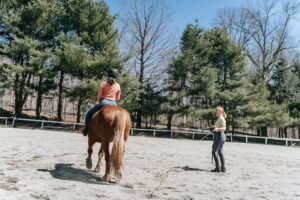

The world of horseback riding is a tapestry of diverse styles and traditions, each offering a unique perspective on the art of riding. Among the most prominent are English and Western riding. While both share a common love for horses, they differ significantly in terms of techniques, attire, and purposes. In this blog post, we’ll explore the key distinctions between these two equestrian styles, helping you gain a deeper appreciation for their individual charms.
English Riding:
- Focused on close contact with the horse.
- Uses lighter and direct rein contact for communication.
- Emphasizes rider balance and positioning, requiring a more upright posture.
- Aids include subtle leg cues, seat shifts, and refined rein aids.
Western Riding:
- Emphasizes a relaxed and comfortable seat in the saddle.
- Utilizes a longer and looser rein contact.
- Often features a low, relaxed hand position.
- Aids include neck reining, leg cues, and weight shifts.
Saddle and Tack
English Riding:
- Features a lighter and more minimalistic saddle.
- Stirrups are positioned slightly forward, promoting a straighter leg.
- Saddles often lack a horn (except for specific disciplines like jumping).
- Tack includes a bridle with a cavesson noseband and snaffle bit.
Western Riding:
- Features a larger, heavier saddle with a prominent horn at the front.
- Stirrups are hung farther back, allowing the rider to have a deeper seat.
- Tack includes a bridle with a curb bit and often features ornate designs.
Attire and Dress Code
English Riding:
- Riders wear breeches or jodhpurs, often with tall boots.
- Helmets are commonly worn for safety.
- Formal attire may include jackets and ties for competitions.
Western Riding:
- Riders wear jeans or pants with cowboy boots.
- Cowboy hats or riding helmets are worn for head protection.
- Attire can be more casual, with Western-style shirts and vests.
Riding Purpose and Traditions
English Riding:
- Includes a wide range of disciplines, such as dressage, show jumping, and eventing.
- Traditionally tied to English equestrian sports and hunting.
Western Riding:
- Associated with ranch work, rodeo events, and cattle herding.
- Reflects the equestrian traditions of the American West.
While both English and Western riding share the same fundamental love for horses, they offer distinct approaches and styles that cater to different preferences and equestrian pursuits. Whether you’re drawn to the elegance of English riding or the rugged charm of Western riding, both styles offer a rich tapestry of history, culture, and horsemanship that continue to capture the hearts of riders around the world. Ultimately, the beauty of equestrianism lies in its diversity and the deep connection between horse and rider that transcends any particular style.